Life is already hard enough—can trading be a little simpler?

The current market environment is indeed making many people start rethinking their income and career choices.
Some hope to increase their income through side hustles, some are starting to explore investing and trading, and others are drawn by stories online such as “how much you can make from one trade” and “achieving wealth growth through trading,” and are seriously learning about this market for the first time.
But after actually starting to trade, many people realize that trading is far less simple than they imagined.
Especially for people with no trading experience at all, entering the market directly with their own funds means facing not only price fluctuations, but also a series of issues such as strategy, position sizing, risk control, and emotional management.
If these things have not yet been established, rushing into the market can easily turn an original intention of simply trying trading into a new source of pressure.
Why is it not recommended for trading beginners to enter the market directly?
Many people who have just come into contact with trading have a very natural idea: watch the market for a while, learn a few indicators, and then put some money in to give it a try.
This is actually not strange at all. In trading, it is hard to truly understand things by looking at theory alone; many things can indeed only be grasped through practical operation.
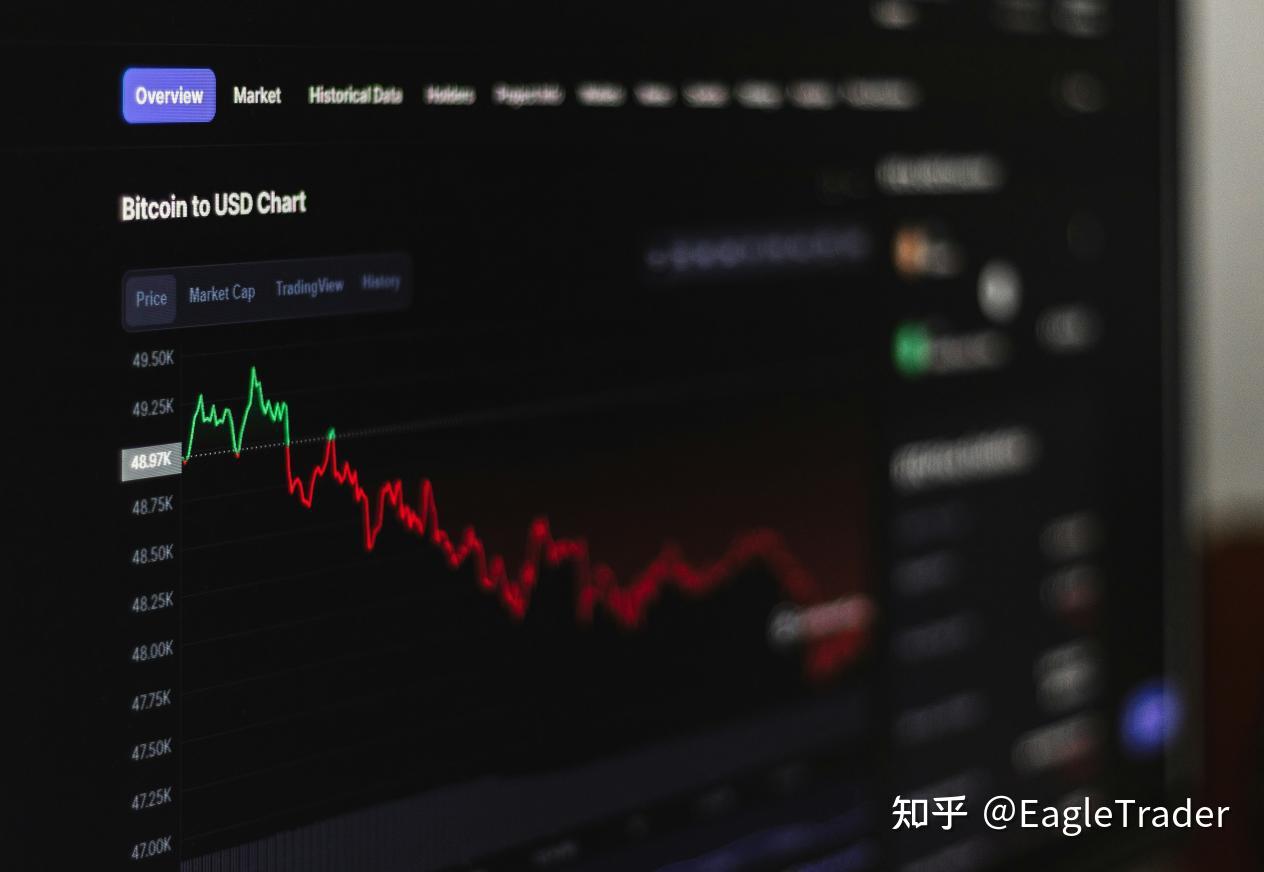
But the problem is that if a person has almost no trading experience and starts trading directly with real funds, several problems will be exposed at the same time.
First, they do not know why they are opening this particular trade.
When they first start trading, it is easy to confuse “seeing an opportunity” with “forming a judgment.”
For example, if prices keep rising, they think they will continue to rise; when a large bearish candle suddenly appears, they think the market may reverse. Or they see someone else share a trading opportunity and want to follow along.
After a day, they may have made several trades, but if asked to review them afterward, it is hard to explain clearly: Why did I enter at that time? Under what circumstances should I stop loss? Under what circumstances should I continue holding?
This is not because beginners are not smart enough, but because they have not yet formed their own trading logic.
Second, they do not have a sufficiently intuitive understanding of risk.
Many people only realize after they truly start trading that “controlling risk” is not as simple as setting a stop loss.
How large should the position be? How much loss can a single trade withstand at most? Should I stop after several consecutive losses? When the account is in drawdown, should I reduce the position size?
Before experiencing real trading, it is easy to think these questions are not complicated at all.
But once the numbers in the account start changing, especially during consecutive losses, the things originally planned can easily change. They want to move the stop loss a little further, add another position after a loss, and think about making back the previous losses with the next trade.
As a result, the initial problem may have been just one wrong judgment, but in the end it turns into continuously expanding risk.
Another issue that is often underestimated is emotion.
Trading is not simply a technical problem.
After several consecutive profits, people easily overestimate their judgment ability; after consecutive losses, they easily doubt their methods and even start anxiously trying to earn back the losses.
At this point, the trading plan will gradually give way to emotions.
So you will find that beginners do not completely fail to know about stop losses, nor have they never learned position management; rather, when it is truly time to execute, it is very difficult for them to do so.
More importantly, before they have formed a trading method, risk awareness, and execution habits, they must simultaneously face market uncertainty and the psychological pressure brought by real profits and losses, which is not an easy start for beginners.
Therefore, rather than rushing to pursue profits from the very beginning, it may be more important to first develop one's trading abilities.
How should trading beginners train?
If trading is regarded as an ability that requires long-term accumulation, then the training stage is actually very important.
The problem is that traditional learning methods have two extremes: looking only at theory makes it hard to truly experience the trading process; trading directly with real funds requires bearing actual financial risk.
Is there a way for traders to trade according to real market conditions first, while focusing the training on strategy, risk control, and trading discipline?
Yes, that is proprietary trading.

The core model of proprietary trading is to let traders participate in market trading using simulated accounts through certain rules and assessments. Although the account itself contains simulated funds, traders still face real-time market conditions. Therefore, the focus of training is not simply to pursue “making money in simulation,” but to complete trades under clear rules and continuously test their own strategies and risk control capabilities.
For trading beginners, the greatest value of this approach is not “whether they can make money immediately,” but giving themselves a relatively controllable training environment.
For example, a clear maximum loss limit can help traders reunderstand what a risk boundary means; rules such as the number of trades and profit targets will force traders to reduce frequent operations without a plan.
More importantly, when traders experience profits, losses, and drawdowns again and again, and then review their own trading behavior, they have the opportunity to gradually find a trading logic that suits them.
Of course, simulated trading does not mean that trading has no risk, nor does it mean that training will definitely lead to stable profits.
What it can truly solve is giving traders a chance to test their methods and execution capabilities before entering a trading environment with higher capital pressure.
And for some traders who already have a certain trading foundation and hope to further improve the efficiency of capital use, proprietary trading platforms will also provide corresponding profit-sharing mechanisms.
Taking EagleTrader as an example, after traders complete the corresponding assessment and meet the profit-sharing conditions, they can receive account profit sharing according to the rules; different plans correspond to different profit-sharing ratios, and some advanced plans can reach up to 90%.
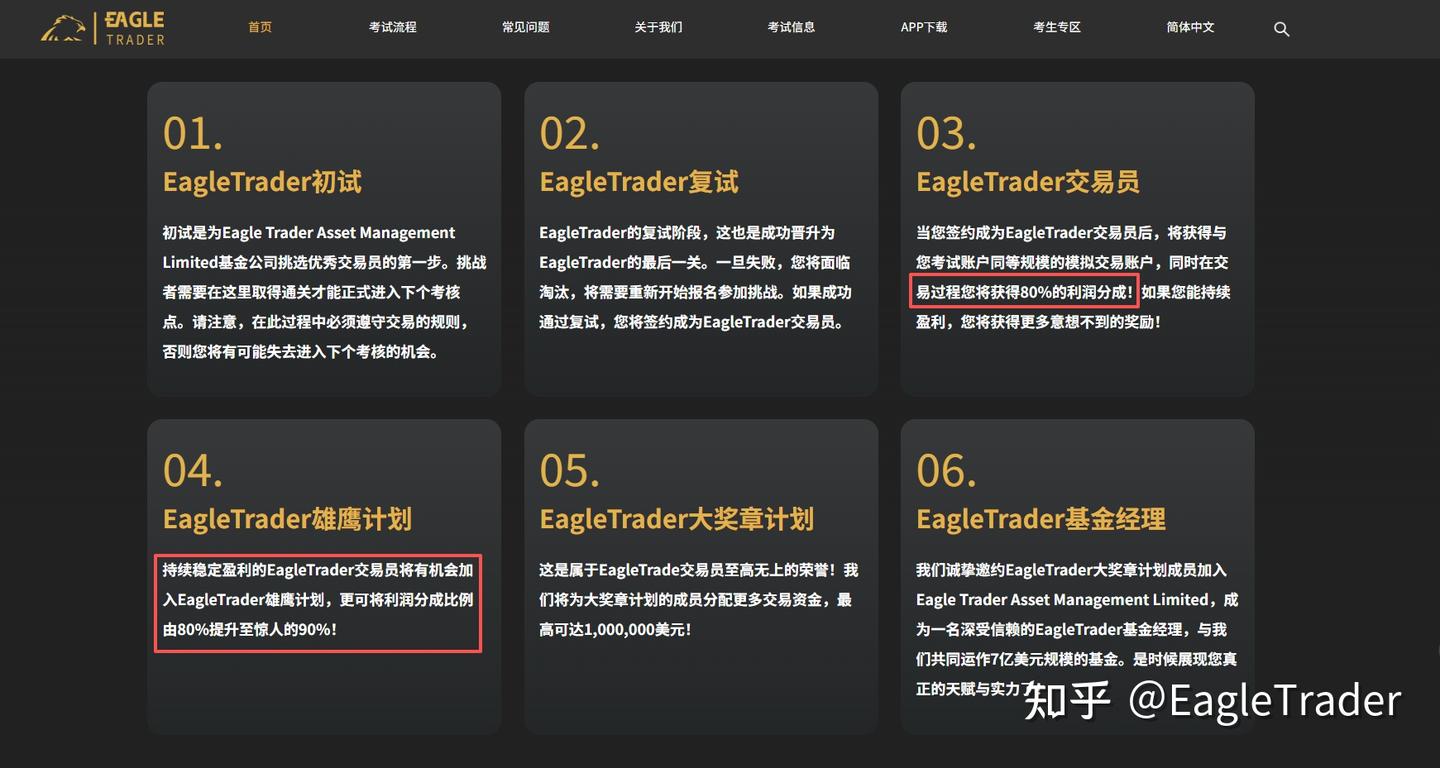
At this point, proprietary trading is no longer just simple “simulated practice,” but has become a path for training, validation, and further participation in trading.
The trading market never lacks opportunities, but for beginners, the most important thing is not to rush into the market, but to first build up their trading capabilities. Learn how to trade first, then consider how much to earn. Trading can be very complex, but if you first get strategy, risk control, and discipline right, it can also be a bit simpler.
This is also a growth path that EagleTrader hopes to provide for traders.
Ready to take on EagleTrader Max?
No upfront evaluation stage. Trade immediately once funded, with up to 90% profit split.