Don't let incorrect stop loss affect trading: 3 common stop loss setting methods

The legendary Wall Street trader Larry Hite once said, "In my investment career, I have constantly witnessed examples of others ultimately failing due to a lack of respect for risk.
If you don't take risk seriously, it will in turn destroy you. ”
Risk management has always been an important part of trading, and the market will not always operate as expected. Even if the strategy itself has advantages, it cannot avoid judgment errors and short-term fluctuations.
Setting risk boundaries in advance is necessary to exit in a timely manner when trading logic fails, and to keep an error within an acceptable range.
That's also why, although EagleTrader Max eliminates multiple rounds of target assessments, risk control standards are still placed in a very important position.
The Max mode path is more direct, and the risk boundary is still clear
EagleTrader's Max mode can enter the trading phase after obtaining an account, without the need to complete multiple rounds of profit target assessments, but the account still needs to comply with clear drawdown rules.
Among them, the maximum account drawdown is 7%, and the maximum intraday drawdown is 3%. Both risk control lines are calculated using a dynamic high water level mechanism.
This setting actually integrates risk management into the trading process.
Traders need to continuously monitor the risk tolerance of their accounts while pursuing returns.
In practical trading, stop loss is one of the most common risk management methods.
How to set the stop loss position? In addition to fixed amounts or ratios, reference can also be sought in conjunction with market structure. Here are three common ideas shared.
01 | Fibonacci level: Finding key retracement areas
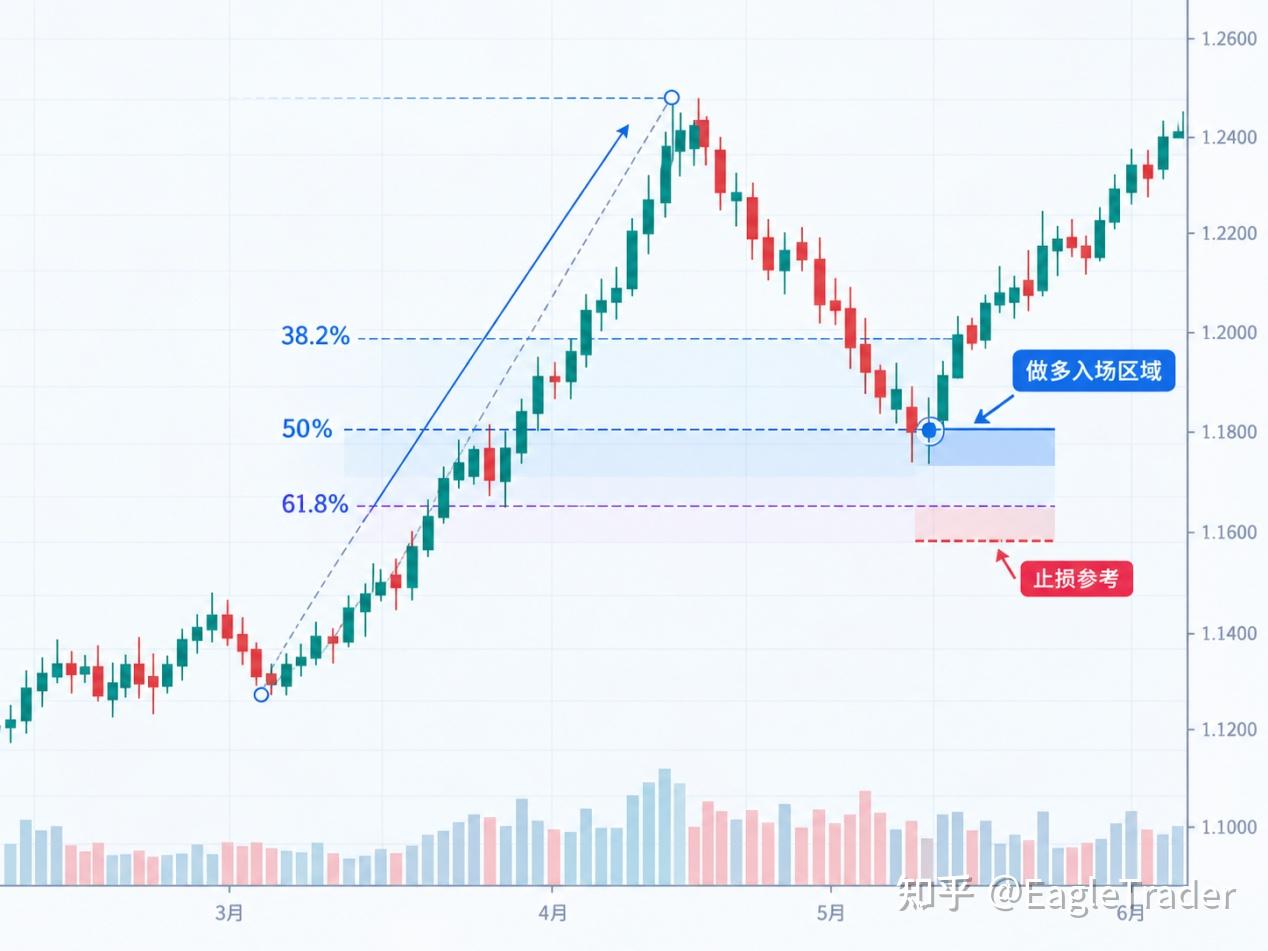
Fibonacci retracement is commonly used to observe potential retracement areas within a trend, with 38.2%, 50%, and 61.8% being common reference levels.
Traders can first identify a clear upward or downward trend, and then observe the performance of the price after it retraces to near the critical ratio.
If the original entry logic is based on the validity of a pullback zone, then when the price clearly breaks through the key level and the original structure is destroyed, it is necessary to re evaluate whether there is still a reason to continue holding this transaction.
Therefore, Fibonacci is more suitable as a reference for stop loss areas, rather than mechanically setting stop losses based on a certain ratio.
02 | Moving Average: Observe whether the trend has changed
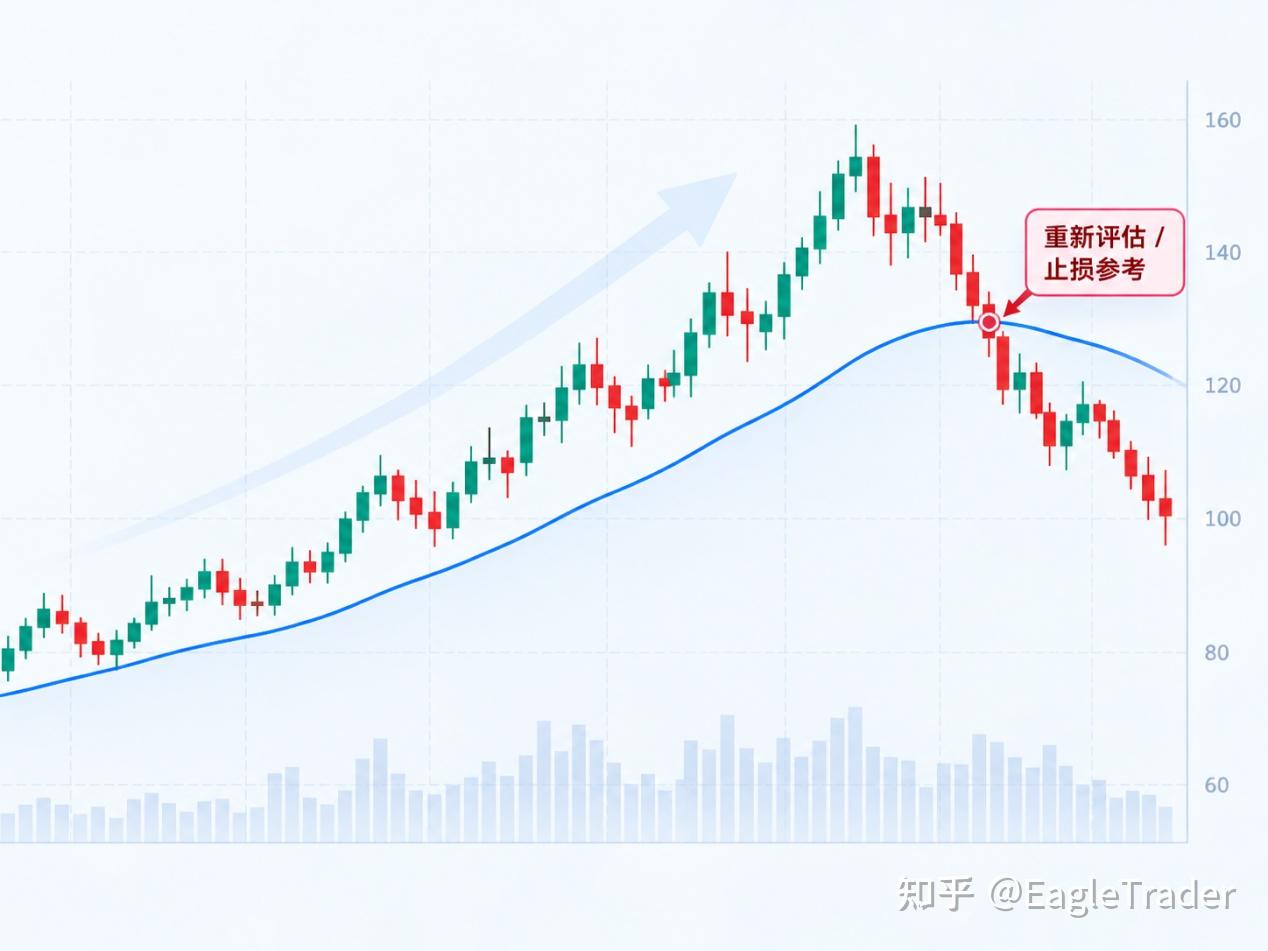
The moving average can reflect the average state of price movement over a period of time, and is therefore often used for dynamic stop loss in trend trading.
For example, when the price runs on one side of a certain moving average for a long time, this moving average can serve as a reference for the trend state.
If the price effectively breaks through the moving average and the market structure changes synchronously, traders can reassess their original position logic.
The sensitivity varies depending on the period of the moving average. Short term moving averages react faster, but are more susceptible to short-term fluctuations; Long term moving averages are relatively smooth, and signals appear slower.
So, when using moving averages to set stop losses, it is more important to align the selected period with your trading strategy.
03 | Trend Line and Support Resistance: Set Stop Loss Based on Structure
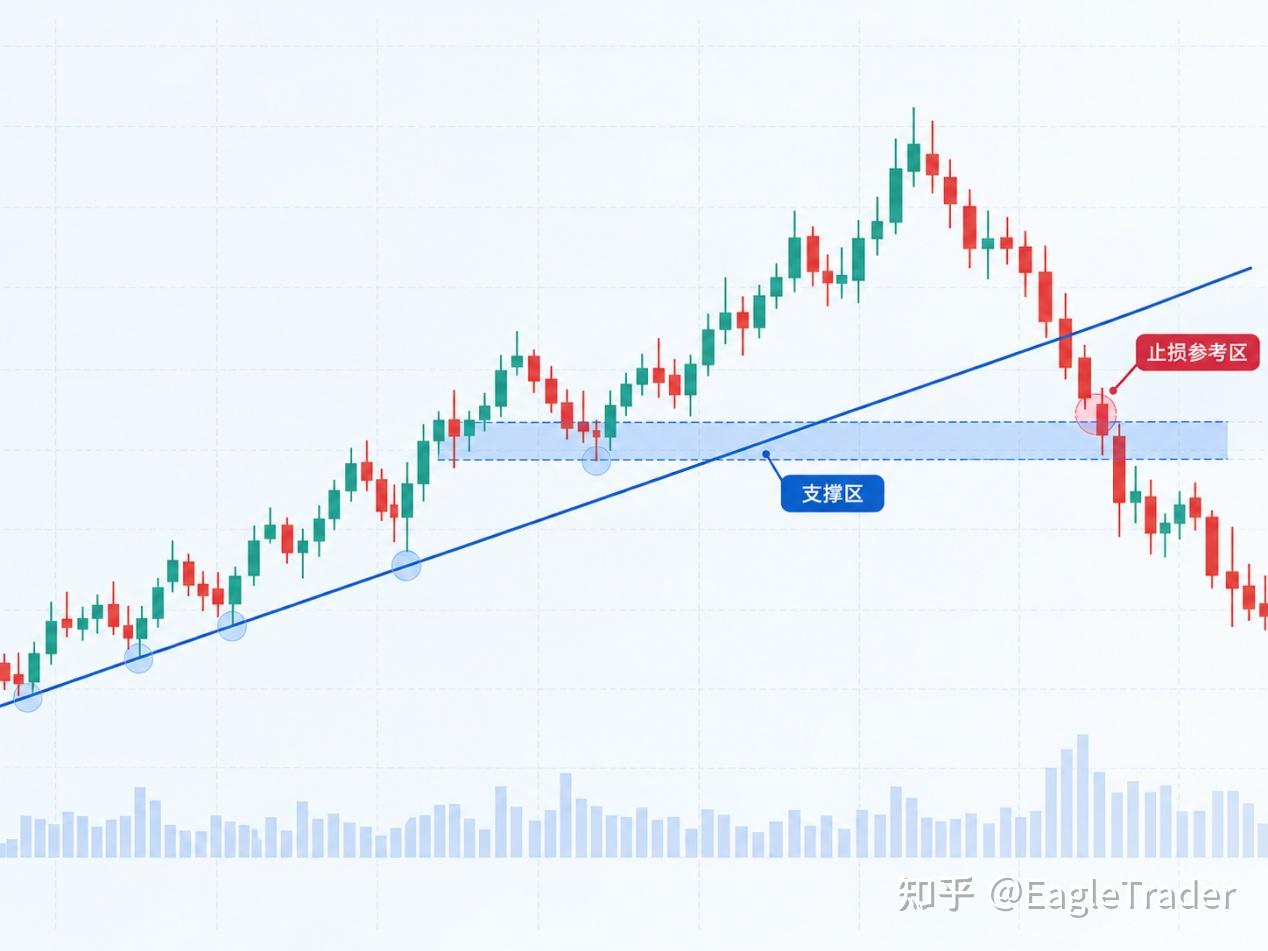
The trend line, support level, and resistance level directly come from the price structure, so they are also relatively intuitive stop loss references.
If a long trade is based on the effectiveness of a key support area, once the price clearly falls below that area, the original trading logic may change.
The trend line is also a similar idea, when the price breaks the original trend structure, it is necessary to re evaluate the position.
The key to this approach is to first clarify under what circumstances the original judgment becomes invalid, and then arrange stop loss around this position, while leaving some room for normal market fluctuations.
Compared to simply setting stop losses based on fixed points, structured stop losses emphasize more on the relationship between stop loss position and trading logic.
Fibonacci, moving averages, trend lines, and support resistance are just tools to help find risk boundaries.
The specific method to be used depends on the strategy, trading cycle, and market environment.
EagleTrader Max has set drawdown restrictions in the hope that traders can still prioritize risk control in trading through a more direct account path.
The above content is only for sharing trading knowledge and does not constitute any investment advice. There are different applicable conditions for related technical methods, please make independent judgments based on your own trading strategy and risk tolerance.
Ready to take on EagleTrader Max?
No upfront evaluation stage. Trade immediately once funded, with up to 90% profit split.