正常回撤还是策略失效?交易者如何用概率思维判断连续亏损

You have been using a trading strategy that has been validated over the long term.
Today, you made several trades in succession according to system signals, and all of them ended with stop-loss exits.
Your account experienced a drawdown, and the familiar entry signals suddenly seemed to stop working.
At times like this, it is easy to doubt: Has the strategy stopped working? Should I change the parameters, or even switch methods?
But take a longer view: over the past 100 trades, this strategy had 55 profitable trades and 45 losing trades; under the established profit-loss ratio, overall returns remained positive.
Then these losses today do not necessarily mean something has gone wrong with the system. Because from the historical record, losses are part of the normal outcomes of this trading system.
This is probabilistic thinking in trading.
Probabilistic thinking: not every trade has to be right
No strategy can guarantee that the next trade will be profitable. A positive-expectancy system does not mean every trade makes money, or even that every week makes money.
It means that, assuming the strategy conditions and execution method remain relatively stable, as the number of trading samples increases, the overall results are more likely to reflect a long-term edge.
If 45 out of the past 100 trades were losses, losses are not necessarily abnormal; they may also be part of normal operation.
What really deserves attention is: Is the win rate still consistent with its original performance? Is the profit-loss ratio reasonable? Has the maximum drawdown exceeded the historical range?

But a single loss is not the biggest test of a person.
What truly makes people doubt a strategy is often consecutive losses.
Suppose a strategy has a win rate of only 40%, but a profit-loss ratio of 2:1.
From a long-term expectancy perspective, it may still be a positive strategy.
But because the probability of a single loss is as high as 60%, the probability of three consecutive losses is actually 21.6%.
If you trade 15 times a week, assuming each trade is independent and the win rate remains unchanged, the probability of encountering at least one “three consecutive losses” within a week can even reach about 85%.
In other words, consecutive losses do not necessarily mean the strategy has failed; they may simply be a probabilistic outcome that normally occurs in this trading system.
Distinguish between normal drawdown and strategy failure
Understanding probability does not mean all losses are normal. The key is to distinguish: Is this a normal drawdown, or strategy failure?
Normal drawdown: trades are still executed according to the original rules, and losses do not significantly deviate from past statistical performance.
For example, trend strategies are prone to consecutive stop-losses in ranging markets. If the drawdown magnitude and loss frequency remain within historical statistics and risk tolerance, it is more likely to be a normal drawdown of the strategy.
Strategy failure: if the win rate continues to decline, drawdown clearly breaks through the historical range, or the originally effective trading logic cannot be repeated over the long term, then it is necessary to reassess whether the strategy’s edge is weakening.
To judge whether a strategy has failed, you cannot only look at how many trades lost today; you need to compare current performance against the long-term record. Short-term losses need to be accepted; only long-term anomalies are worth evaluating.
But many traders, after consecutive losses, start modifying parameters and switching strategies before they have completed an evaluation with a sufficient sample.
The result may be: the old strategy has not yet been fully validated, and the new strategy is abandoned again because of short-term losses, ultimately leaving no method to be executed consistently.
A single high return is not as good as long-term consistency
If one trade earns exceptionally much, does that mean performance is very good? Not necessarily.
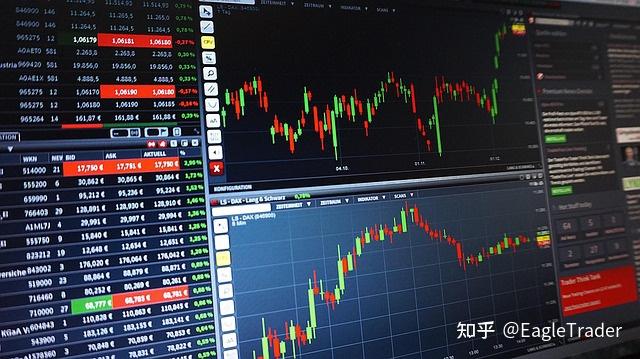
Capturing one big market move may significantly grow the account in the short term.
But if almost all the profit for the entire period comes from this one trade, while other trades fluctuate greatly, this profit structure may not be stable.
Two traders end up with the same final return: one relies on a single heavy position, and the other relies on repeated stable execution. The numbers are the same, but the answer to “can this be replicated in the next stage?” is completely different.
Long-term trading cannot only look at how much money was made; it also needs to look at how the profit was made.
What is EagleTrader Max focusing on?
The recently launched EagleTrader Max, unlike models that require multiple rounds of assessment, allows traders to enter the trading and profit-sharing process more directly.
But reducing the assessment process does not mean only focusing on the final profit number.

In Max’s rules, profit consistency is an important condition.
It does not require earning the same amount every day; rather, it avoids overall profit being overly dependent on one exceptionally outstanding trade.
If most of the profit comes from one high-risk or accidental big market move, the profit number may not fully reflect long-term trading performance.
On the contrary, when profit comes from multiple relatively stable executions, it can demonstrate whether a trading approach has continuity.
This follows the same logic as probabilistic thinking: trading ability is not proven by a single outcome, but gradually revealed across a series of trades.

When you are on a losing streak, don't rush to use short-term results to reject the entire system; when you have a single large win, don't overestimate your strategy's ability because of one burst of success.
What probabilistic thinking truly helps traders build is a longer-term way of judging:
Look at a series of trades, not a single trade;
Look at whether drawdown remains within a reasonable range, rather than immediately changing the system just because you see a loss;
Look at whether profits can be consistently repeated, rather than focusing only on how much was made in one particular trade.
This is also the significance of profit consistency.
Whether it is a trading strategy or EagleTrader Max 's requirement for profit consistency, what ultimately matters is not a one-off result, but whether this way of trading can be continuously replicated under the premise of controllable risk.
This article is popular science content on trading psychology and does not constitute any investment advice. Trading involves risk, and past performance does not represent future results.
Ready to take on EagleTrader Max?
No upfront evaluation stage. Trade immediately once funded, with up to 90% profit split.